
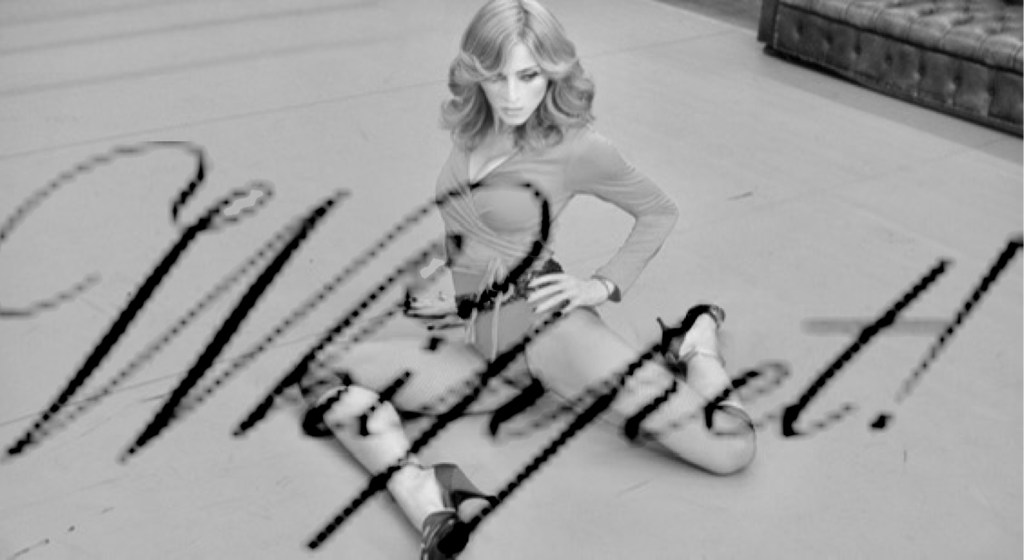
The stiff brown carpet of my grandmother’s sitting room scrapes at my shins with the crusty, dried spillages of the past forty years. I’m scribbling in my diary until the drone of MTV’s Greatest Hits halts. My eyes dart to the white light of the television screen. The lights of a dance studio have sparked to life. A woman walks in with her back to me, she sheds her electric blue tracksuit and crouches to turn on the stereo.
Madonna stretches her limbs in a skin-tight pink leotard. A clock ticks. The bass synth swells. She sings to me in her lower register: Time goes by so slowly.
This is my earliest memory of being totally spellbound by a song. I would jump and hop and throw my plaits around my little face, singing the lyrics at the top of my lungs. This is all perhaps the appropriate reaction of a five-year-old girl to a pop song with a catchy hook and a woman twirling in a pink leotard, except I was the most timid five year old anyone had ever met.
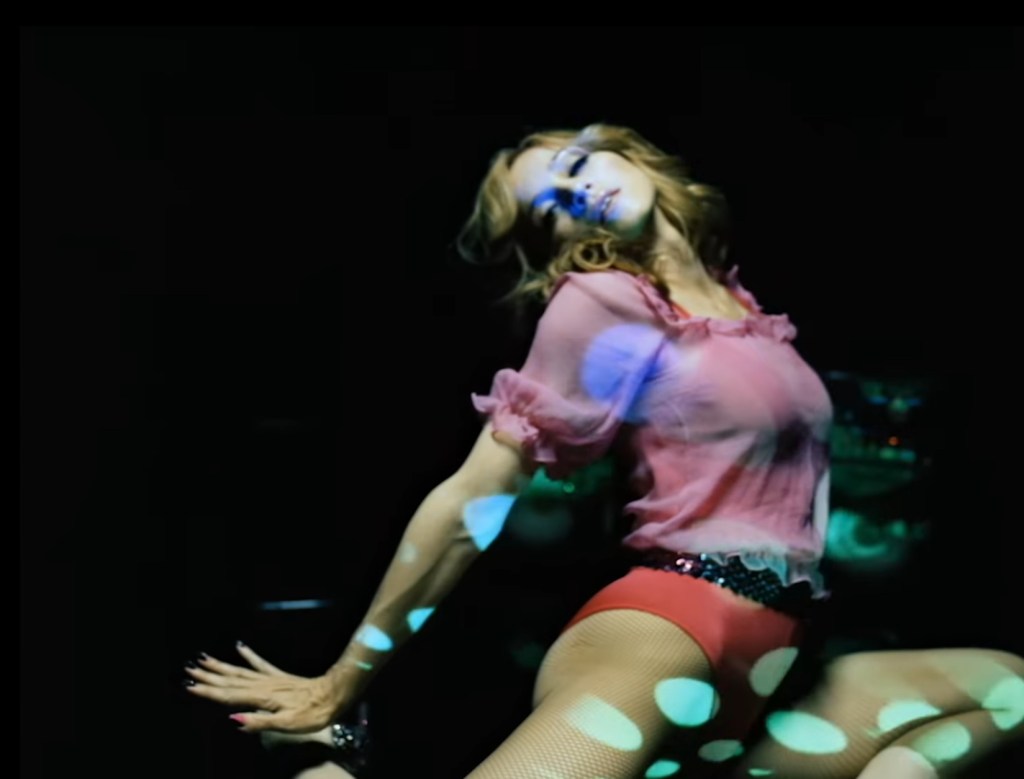
Hung Up was the lead single of her tenth studio album Confessions on a Dancefloor and without even hearing the rest of the record, I was completely enamoured by its world, glistening pink and purple under disco-ball light.
20 years after the release of Hung Up, Madonna’s music has re-entered in the zeitgeist. Her 1998 magnum opus Ray of Light is the internet’s hottest vintage record, inspiring the trendiest mainstream releases of the year like FKA Twig’s Eusexua and Addison Rae’s Addison. Generation Z’s rediscovery of Madonna’s catalogue is largely limited, however, to the Ray of Light album and, somewhat randomly,What It Feels Like For A Girl, a track from her eighth studio album Music released in 2000. Despite the commercial success of Confessions on a Dancefloor, the album is largely excluded from our collective memory of Madonna‘s discography. That is, until Madonna revealed earlier this year that she had been working on Confessions on a Dancefloor ‘Part 2’ in an Instagram post.
While the announcement is definitely a symptom of our current cultural nostalgia loop, where everything is some form of a remake, I can’t help but feel a buzz of excitement about what is yet to come.
The four albums that followed Confessions have drawn mixed reactions. This can mainly be attributed to a shift where Madonna began to chase after the biggest names of the time: Timbaland for her 2008 album, Diplo for her 2015 album and Maluma for her 2019 album. Although it’s too early to tell which collaborators she will include on this album, it’s reassuring to learn that she has once again partnered up with Stuart Price, the producer behind the original 2005 album.
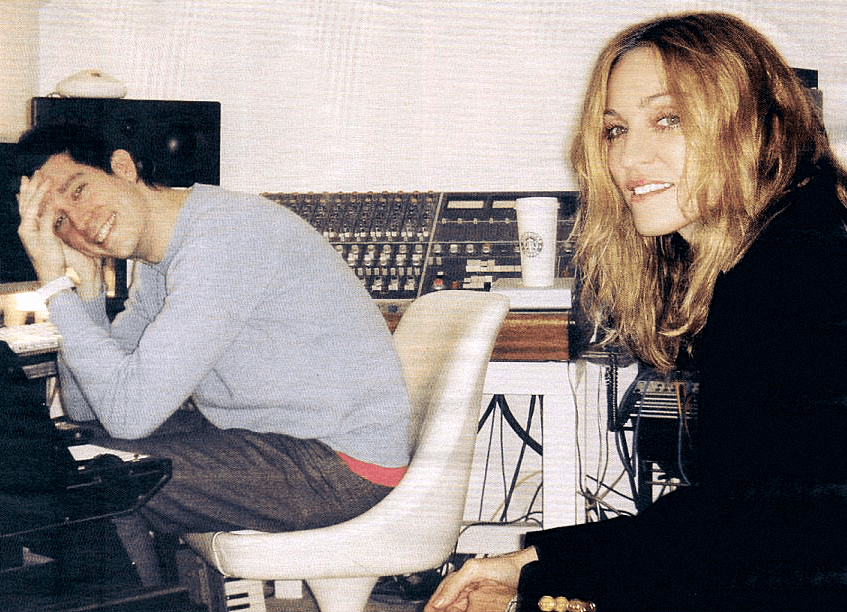
Madonna and Price both speak of the time they spent together working on the 2005 album as a playful, relaxed period. Price even described it as ‘more of a really fluid and almost childlike environment than anything that seemed too serious,’ something he attributes the fun, natural flow of the album to. And it seems that their fun didn’t stop there, since they’ve spent the past year posting cheeky TikToks and pictures from the studio.
We know very little about the track list apart from the two songs Madonna mentioned briefly on Jay Shetty’s podcast: Fragile and Forgive Yourself. Both songs inspired by her complex relationship with her brother Christopher Ciccone, who tragically died of cancer in 2024. From the little she revealed about the songs, we can expect more of that vulnerable spirituality held in balance with electronic dance-pop beats found on songs like Isaac from Confessions or Nothing Really Matters on Ray of Light. It is in this sweet spot that I think Madonna shines brightest.
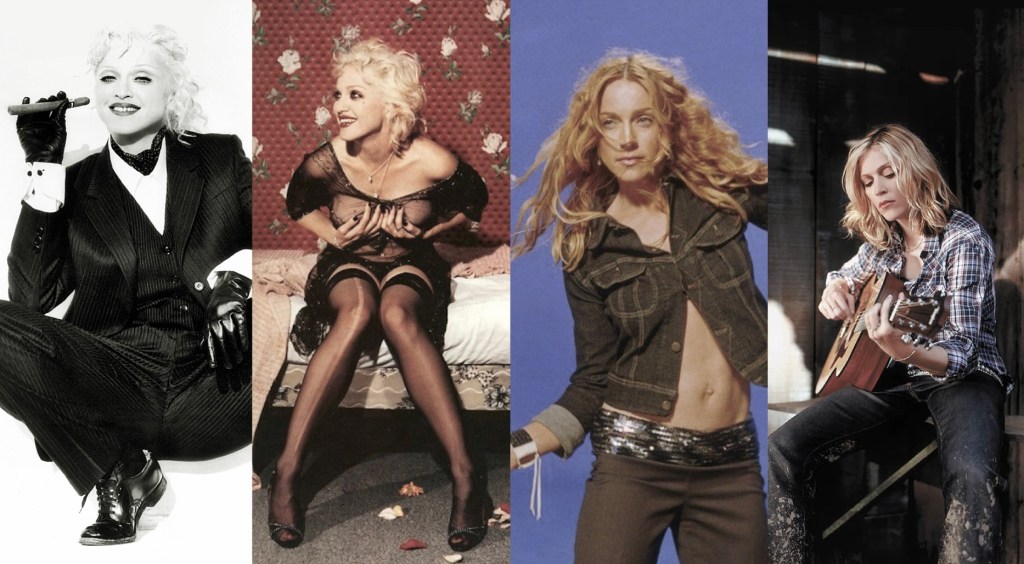
I believe that Madonna is best understood as a conceptual performance artist. Her career has so largely shaped our conception of musicians having album “eras” today with her constant “reinvention” from album to album. From Erotica’s dominatrix alter ego ‘Dita’ to her spiritually conscious persona in Ray of Light, her transformations have always been unpredictable. Her announcement that she will release a Part Two is a surprise to fans who have never seen her repeat a concept.
The danger of Madonna falling into our cultural nostalgia loop is that she runs the risk of caricaturing herself. Confessions on a Dancefloor is iconic because of the way it seamlessly patches together the past and present. The lead single Hung Up epitomises this. Price sampled ABBA’s synth riff from Gimme! Gimme! Gimme! but remained committed to transforming it. They played around with its tempo and pitch, filtered it, added fresh vocals, and surrounded it with contemporary dance synths, giving it a modern texture. The nerve to sample one of the most iconic riffs in pop music history and not surrender to its greatness but dare to reconstruct it makes it legendary. Even Price speculated that their transformation of the sample may have been the reason why Benny Andersson and Björn Ulvaeus approved it.
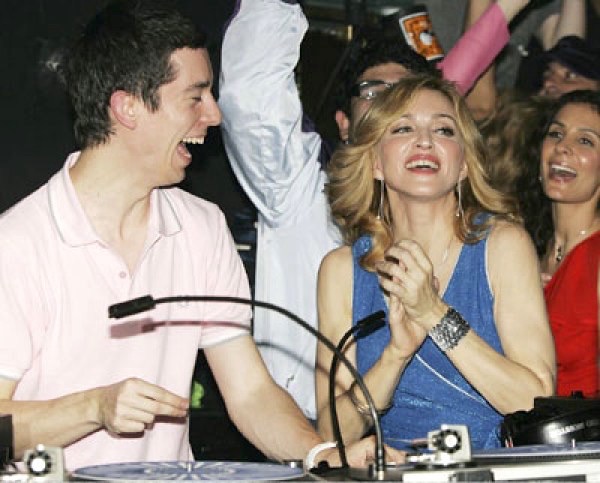
Price’s work as a DJ majorly enhanced the record, since he had initially taken the demo from a track he had played a number of times during his DJ sets and seen garner good reactions. In addition, throughout the making process they were able to use his DJ sets as opportunities to test the demos in clubs and gauge their reception. When you first listen to the record (particularly the CD or Twenty Years Edition where the songs are mixed to flow together), you can easily latch onto the energy pulsating through each track and let it carry you through the album.
Beyond being an artist and the pop culture icon, Madonna is an indomitable force. Her energy is magnetic, and her fierce tenacity is tangible in every song, performance, and interview. Madonna dances so furiously in the Hung Up music video, you would never know she had broken nine bones including her ribs, shoulder blade and collarbone in a horseback-riding accident only six weeks before.
Although she lost her footing with the past few albums since Confessions, I have no doubt she will find her balance again as she has so many times before.


 whippet!